Lessons from August/19

Sliding down on a random evening in Darling Harbour, Sydney

Last month we were lucky enough to have visitors since uncle and aunty were in town. Not my uncle, but my kids’ uncle that is. We headed to Darling Harbour to show off the International Conference Centre to an aspiring architect. But it also happens that just a few metres away there is a playground which is buzzing all day, even as late as nine in the evening. So just because uncle is here, we ended the evening going up and down the slides (see photo for evidence). It is my favourite photo from last month because it reminds me that “happiness is only real when it is shared”, and this was one way to share it with the kids and our guests. 

In a way August reminds me of the first few moments when you start pushing yourself down the slide. You move slowly and wait for gravity to pull you down. August, and the months that follow, quickly slide you down the calendar until the year is over. There is one thing you need for you to slide all the way down and that is letting go. So here are three lessons from August that I will use to let go and move into the last few months of the year. 

Letting go requires boldness 

In the beginning of August Olympian Sally Pearson announced her retirement from athletics. Her decision to retire from athletics comes after several injuries she had, which disrupted her plan to compete further. I was inspired by Sally Pearson’s announcement and her decision to listen to her body over her competitive spirit and to prioritise her life accordingly. It got me thinking on being free to let go, even of that which defines me simply because I have been lucky enough to do it for so long, by choice or by circumstance. I had been thinking for some months on our strengths should not keep us from being open to new paths. Pearson undoubtedly had a talent as an athlete. She was in fact a world champion time and time again. Yet she was bold enough to let go when it felt right to do so. Her decision does not make her any less talented. Her future is unclear, of course, but that does not make it one inch less exciting. She has let go and is ready to grow into her next phase in life.   

When letting go is a key result

Letting go is an objective in itself. The decisions that follow are the key results that fulfil it. I did get to re-listen to the Ted Talk by John Doerr on how Objectives and Key Results (OKR) help a business or project succeed. One quote from Bono resonated with me and is also relevant when letting go is the right thing to do. Here’s the quote:  

“So you’re passionate? How passionate? What actions does your passion lead you to do? If the heart doesn’t find a perfect rhyme with the head, then your passion means nothing.”

Finding a perfect rhyme between the heart and the head is a major achievement. Even in Sally’s case, her passion did find a perfect rhyme with the head and she was brave enough to take the decision. Sally is not the only one who reminded me about letting go. Also in August I stumbled upon a blog by an ex-Vodafone colleague who boldly decided to take a break from the corporate world and become a farmer with a cause. His blog is entitled ‘Leaving the trap’…so what’s this trap?

The trap of not letting go

Whilst these are all life changing examples of letting go, there is a more gradual way to let go, it is deep within and very personal. One quote I stumbled upon in August was the concluding note by C.S. Lewis in his book Mere Christianity. He states 

“There must be a real giving up of the self. You must throw it away…you will never make a good impression on other people until you stop thinking about what sort of impression you are making. Even in literature and art, no man who bothers about originality will ever be original: whereas if you simply try to tell the truth (without caring twopence how often it has been told before) you will, nine times out of ten, become original without ever having noticed it. The principle runs through all life from top to bottom. Give up yourself, and you will find your real self.” 

If you simply try to tell the truth – now that’s a key objective. Primarily being truthful to ourselves, then reflecting that in our relationships and boldly fulfilling it through the decisions we take. The alternative is a trap – not being truthful to self, putting up a face in your relationships and being trapped in a lie. 

Letting go requires courage to let go of worries and expectations, the safety of the familiar and the certain, not making whatever comfort a liability that hinders our journey to become the people we were designed to be. 

If only we simply try to tell the truth.
Lessons from July/19

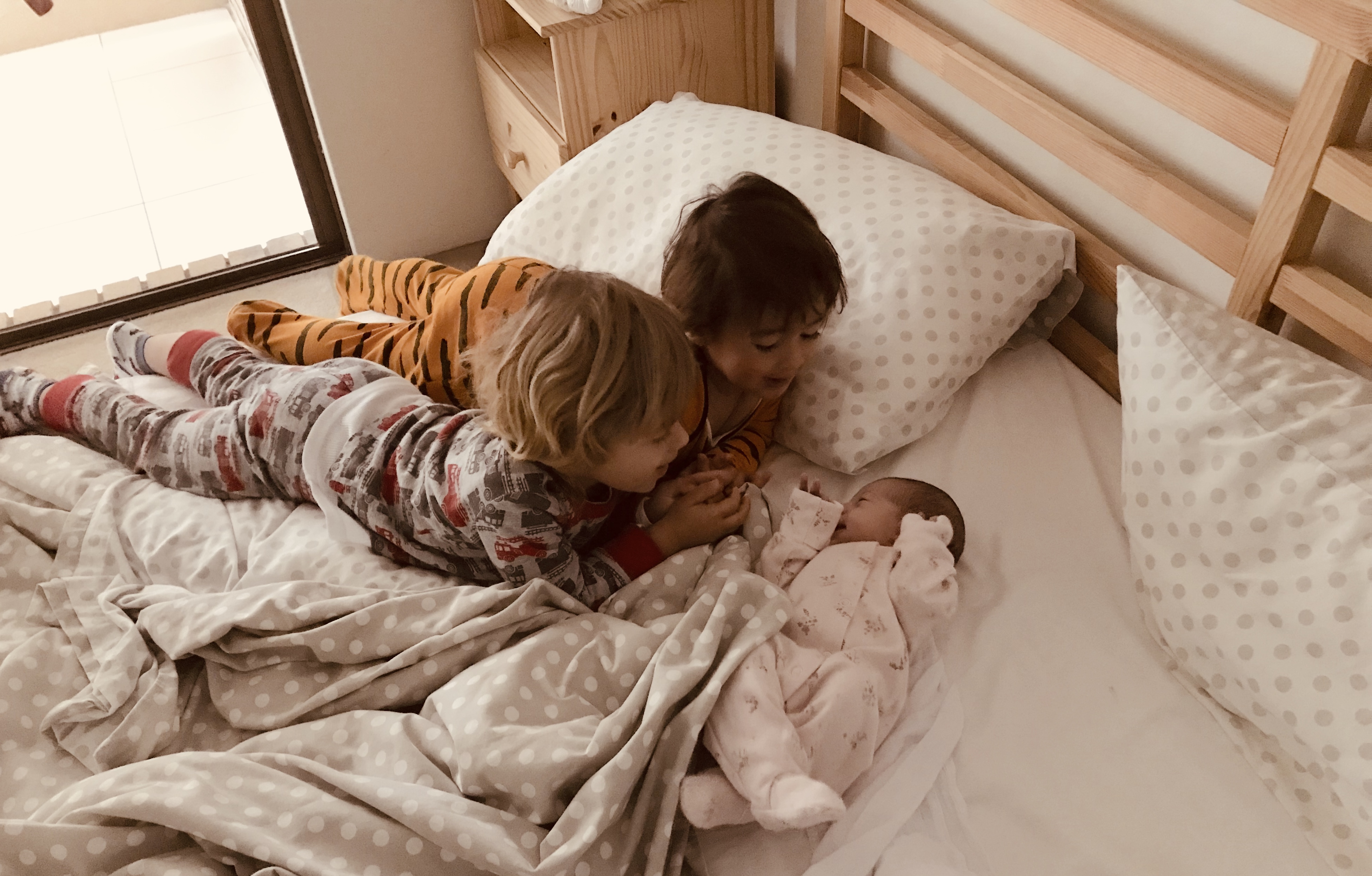
Zara, our new addition to the family, being entertained by the boys

The smallest person I met in 2019 has been our new addition to the family, whom we called Zara. She was very punctual with her arrival last month. To welcome Zara into this big world here are three lessons from July on the notion of ‘small’: 

As small as a company of one

Jim Collins studied the landscape of fallen big companies. He suggests one stage of the trajectory being the “undisciplined pursuit of more”. Paul Jarvis tackles this notion from a totally different angle – small companies are managing to be successful by avoiding harmful growth (a more disciplined pursuit of more). His book, Company of one, suggests that the rise of companies made up of a few individuals, or even a single individual, could be the next big thing in business. 

There are benefits in being small. After several years of having people ‘reporting to me’ (as we say in corporate lingo), I was offered a role with no direct reports and with the brief of working cross-functionally. Suddenly I’m a team of one, overwhelmed and excited. Overwhelmed at needing to convince anyone to work with me and excited that I had to work with anyone who shared the same vision and was excited enough to set aside a few hours to contribute to the first deliverable. No hard obligation to follow my lead. Only if you care enough to do so!

Both the idea of staying small and the idea of amplifying the individuals’ strengths were key. I did not resort to establish big committees with a complicated set of roles, and at the same time I worked with others to create a space where any valid idea could grow. The outcome has exceeded my expectations and I am looking forward to the next sprint as I get back to work later in August. 

As small as the smallest viable audience

It’s one thing to avoid harmful growth when you are still small, but how do you pursue growth in a disciplined way when your years of success have made you scale up already? On an HBR IdeaCast Ranjay Gulati shares his research on how to find (and keep) your company’s soul. He suggests three key principles – returning to the original intent of the company, being clear on who the customer is and getting the rest of the team excited to come to work every day.

Homing in on the marketing side of things, Seth Godin presents the idea of the smallest viable audience in his most recent book. He writes about being specific on the market you want to serve, against trying to play for everyone. He does not present this as one more way to be smarter than the competition. His view is more about being realistic on what you can really achieve. As the author suggests we often hide behind everyone and anyone rather than be specific. Being specific on who we are targeting and aiming to serve will make it easier to determine whether it worked or it didn’t.

Small is beautiful and the price of growing up

My three-year-old son has a t-shirt which reads “Never Grow Up”. If I could I would wear it as my under-vest everyday. A beautiful blog I stumbled upon last month has been Grown and Gathered by Matt and Lentil. Recently they published a book called The Village. In it they celebrate village life in all its fullness. I come from the smallest country in Europe, which in 2019 is forecasted to register the highest rate of economic growth in the EU. One thing that is special about Malta is its smallness. What Matt and Lentil notice in their review of village life reminds me of Malta. However the Malta of late is growing up and opting to move away from what made it beautiful. At times its growth seems to be an undisciplined pursuit of more. Some argue that it has even lost (or rather sold) its soul.  

If only we realised the value of being small and the big price of growing out of it. One hopes that individuals, companies and even countries avoid going through the same trajectory as the big companies Jim Collins wrote about, all those that came falling down. One hopes that we all manage to find (and keep) our soul.  

Lessons from June/19

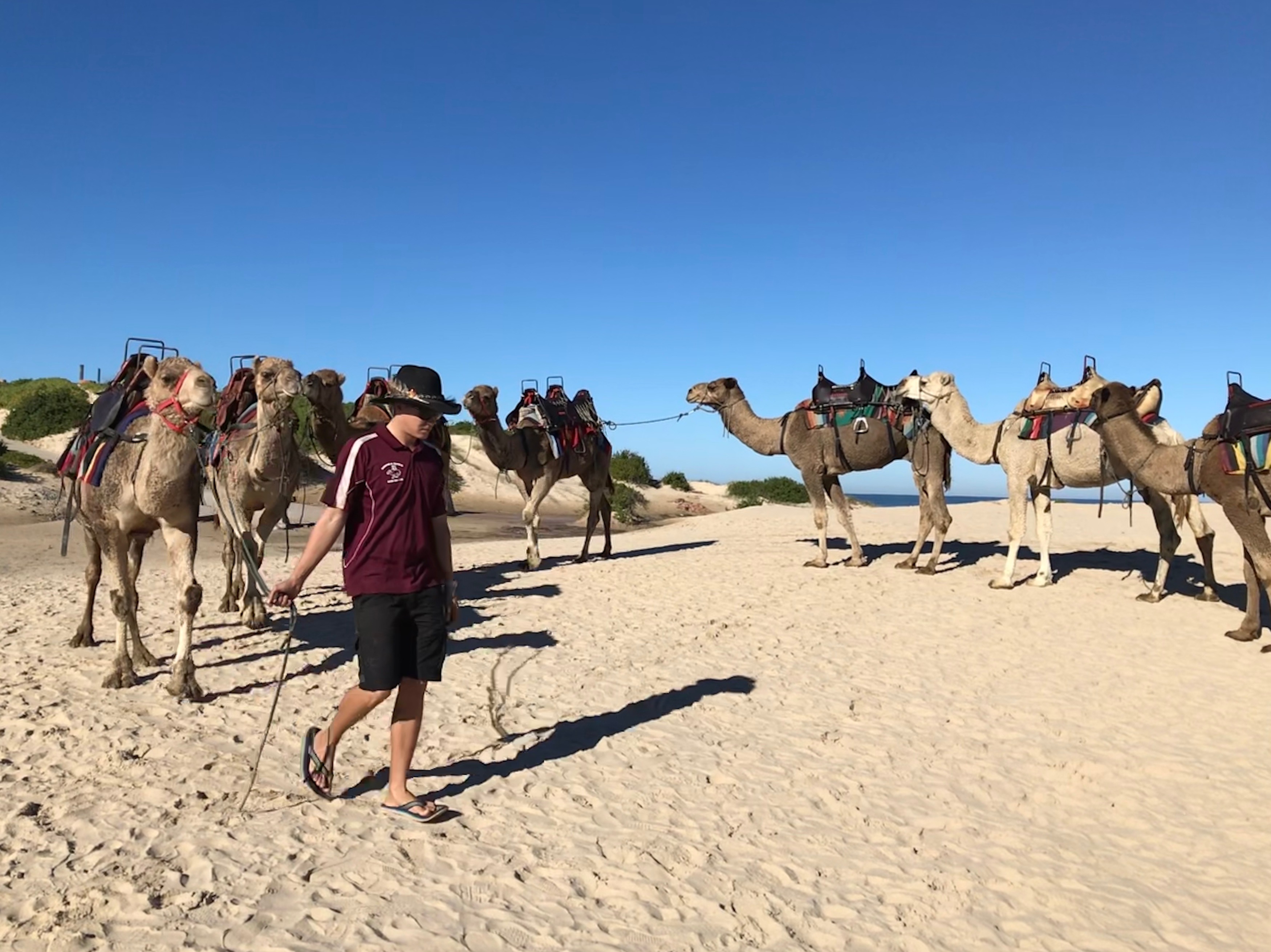
Anna Bay – Port Stephens during June’s long weekend in New South Wales (own photo)

“Time waits for no one” was premiered in June on BBC Radio 2. It is a lost track sung by Freddie Mercury in what was a piano rehearsal of the song. How appropriate for a track with this name to be premiered halfway through the year! The end of June is a good reminder that really time waits for no one. Whatever your idea of 2019 has been, half of it has passed by now. So how do I make the next six months count as much (if not more than) the last six? It is in this vein that I look back on June and write about three lessons which resonated with me in June and which I will carry with me in the next half of the year:

One consultant I never expected to find interesting:

To my wife’s delight, I found myself reading about Marie Kondo and her philosophy on decluttering your life through tidying up. It is pretty impressive to see the scale of Kondo’s following, of her book and her Netflix show. She is even able to call herself a consultant on the topic. My DNA is probably not tuned to decluttering by default but over the years I have come to appreciate having my physical and mental space ‘tidy’. Two books which inspired me to do more of this were The One Thing (by Gary W. Keller and Jay Papasan) and The Laws of Simplicity (by John Maeda). ‘The simplest way to achieve simplicity is through thoughtful reduction’ is the first law in the latter. The former advocates simplifying one’s workload through focusing on the most important task. Tidying my physical and mental space is surely something I want to do more of over the next six months. 

One cooking experience worth writing about:

Tidying up hopefully leads to extra time and space, but also requires dealing with extra stuff So what do you do with the extra? Waste it or put it to good use? In June I joined some colleagues in spending a morning at Oz Harvest. The charity rescues 180 tonnes of food each week. The food comes from 3,500 food donors and reaches the communities who need it as ingredients in prepared meals. The meals are prepared by companies like Vodafone who decide to dedicate a few hours cooking with proper chefs in the OzHarvest kitchen. In the words of Pope Francis,

“waste reveals an indifference towards things and towards those who go without. Wastefulness is the crudest form of discarding…to throw food away means to throw people away”.

Even though both  my OzHarvest experience and the quote by Pope Francis refer to food waste, throwing away anything is a waste of opportunity I would like to avoid in the next six months, be it time, money or anything else. 

One word to which I will dedicate time for the rest of the year:

Earlier this year I started working on a big insight piece which has in June become my full-time job. The piece is broad, yet the ask is simple…focus on the ‘why’. Hence it is not surprising that the book I plan to read next is The Book of Why by Dana Mackenzie and Judea Pearl. However, beyond my customer experience research, I feel that the process of tidying up one’s life and putting the extra to good use points towards getting to know in a deep way why you do what you do. Last month I watched the movie The Little Prince for the nth time. Here’s one quote which delves deeper into one’s purpose and search for meaning: 

“People where you live, the little prince said, grow five thousand roses in one garden… Yet they don’t find what they’re looking for… And yet what they’re looking for could be found in a single rose.”

If you have ever run a (half) marathon, you can identify with the state of mind when you get past half the distance. It gives you the satisfaction of having one half behind you, and at the same time reminds you that you need to use the remaining energy you have left for just as much the length. With that reality in mind, you just press on, and encourage yourself on the basis of how far you have already progressed. 

So this is what I wish for you (and me) in the remaining months of 2019. I hope you make the most of the time by decluttering the noise, making the extra more meaningful, and in the process find the ‘single rose’ which answers your deepest WHY. 

Lessons from May/19

May surely has been a change of season and not just weather wise! Europe got a fresh batch of MEPs, Australia went to the polls and the UK lost May. It has also been a change of weather in my head. Here are some lessons from last month which I summarise as three types of gaps I see around me.

The Experience Gap:

“80% of CEOs think they are providing a superior experience. 8% of their customers think so.”

That is one big gap! Ryan Smith from Qualtrics opened X4 Summit in Sydney on this note. Inspired by the speakers at the conference I’d like to build on this data point. For the gap to be so big there are two other realities to take note of:

Primarily, I think that the teams that are led by those same CEOs think far less about experience than they should. It does not feature enough in their KPIs, and, often, when it does feature it is not followed up rigorously.

Secondly, I guess that if you had to ask the same CEOs what is the experience of working for their company, they would rate it much higher than their employees.

As cliché as it might seem, experience management is not optional. If you opt not to make it a priority, your customer will not make you a priority either and leave when others make them their priority. Same goes for the employee. In Smith’s words, if you are not racing up in the experience economy, you are racing down…and winning has become even harder.

The Design Gap:

So how do you start by closing the experience gap? I found the answer on a pair of socks which I took back with me from Blackdot’s Customer-Centric Growth Summit. I must admit I was surprised to dig out the socks from the conference goodie bag, but then it all made sense! Spotted with Blackdot’s dot the socks have printed on them the words “Take a walk in your customers’ shoes”. 

The great Don Norman wrote an interesting piece on how design is failing to take into account its user, in his example the elderly. His argument is pretty logical and explains the design gap brands fall into:

“Everyday household goods require knives and pliers to open. Containers with screw tops require more strength than my wife or I can muster…Companies insist on printing critical instructions in tiny fonts with very low contrast.”

The same train of thought may be used for other consumer groups, not just the elderly. This is surely a design gap to be aware of.

The Human Gap:

I cannot look back on May, and not take lessons from May herself, Theresa May that is. I am really not into the UK political scene but I did watch the UK Prime Minister’s resignation speech. It is no surprise that the media focused on the last few moments of her speech when her voice cracked. So many have commented in so many different ways on these last few moments of the speech. Personally, I felt that it was such a human and authentic moment, so genuine, so rare for any leader, both in the political and the business world.

In the same month another female Prime Minister taught the rest of the clan one thing or two about being human. On Jacinda Ardern’s initiative together with French President Emmanuel Macron, leaders met with big online players in Paris for a summit against online extremism. Back in New Zealand, she then went on to present the first ever Wellbeing Budget, which is a policy innovation not just for the country she leads, but for the rest of the world.

Ardern’s tenure as PM is teaching the world that you can still be brave and not forget to be human. Patricia Limanouw from Qantas ended her insightful piece at X4 with a fitting quote from Brene Brown.

“Courage is contagious. Every time we choose courage, we make everyone around us a little better and the world a little braver.”

The three gaps build on each other, and so does the hard task of addressing them. To close the experience gap one needs to really take a walk in the customers’ shoes and be sensitive to the user. However sensitivity calls for us to not only to be accurate but also to be human, put a human face to the insight, whatever that is, wherever that is required. Above all, it calls for us to choose courage.

Lessons from April/19

Going round the world requires you to travel 25k miles. In April I travelled 8.8k miles, all the way between 2 continents….and travelled back a few weeks later (another 8.8k miles). Just one more trip back and I would have gone the full distance around the world. That’s how far I have travelled physically, but mentally, I think I have travelled further. Here are 3 things that resonated with me last month.

A. One word which I kept coming back to – context.

Context is really a beautiful thing because it helps us value things better. I came across this notion in one video by Matt Kelly, part of a 40-day series leading up to Easter. Stephen Covey’s 2nd habit of highly effective people re-enforces this notion. In his terms context is taking a step back and seeing the bigger picture. So where does context come into the story? The simplest end scene of a movie becomes really meaningful when you have seen the rest of the movie. Two colleagues work better together when they get to know what each of them is strong in, then working towards making the most of the collaboration. More importantly, context is necessary when taking big decisions in life’s journey. Putting things in the right context helps make more meaningful choices.

B. One feeling which I started to make friends with – uncertainty

Sometimes though context is not enough. Even after you do all the thinking some questions remain, particularly those related to the future. In these instances uncertainty abounds! The feeling of uncertainty makes me feel less in control and able to plan. However, uncertainty opens up wider options and from that angle it gives us alternative way forwards to the ones we would have considered. One book I snacked upon in April was “The 9 Lies About Work” by Marcus Buckingham. When discussing leadership Marcus suggests how in absence of certainty a leader should be focused on cascading meaning and purpose to excite the rest of the team.

C. One question to bring it all together – “what are you?”

In the words of Eddie Fenech Adami, a Maltese politician and the 7th president of Malta, “there’s a project for each and everyone of us. Life is about understanding what that is and accomplishing it to the best of one’s ability”. And this is where context and uncertainty dance together. If context gives value to things along the journey and uncertainty is the invitation to make the future of that journey exciting and full of purpose, the two can dance together.

One afternoon in April I met up with one of our business leaders at Vodafone. She challenged me with one question I couldn’t answer straightaway – “What are you?” Are you a salesperson, a strategist, a marketeer? Answering that question does not mean you exclude any piece of work which does not fit in the chosen profile. Rather it helps in understanding how to lead in different situations, by being aware of what you’re confident to achieve, and where you’re more out of your comfort zone and need guidance and support. It gives context to the big decisions along life’s journey (at work and beyond) and purpose in the moments of uncertainty.

Help needed to run a half marathon with purpose!

In May I will be running the Sydney Half Marathon. Some context to this – I am trying to make the kilometres count and am fundraising for Kids with Cancer Foundation. Click here to support the kids

Lessons from March/19

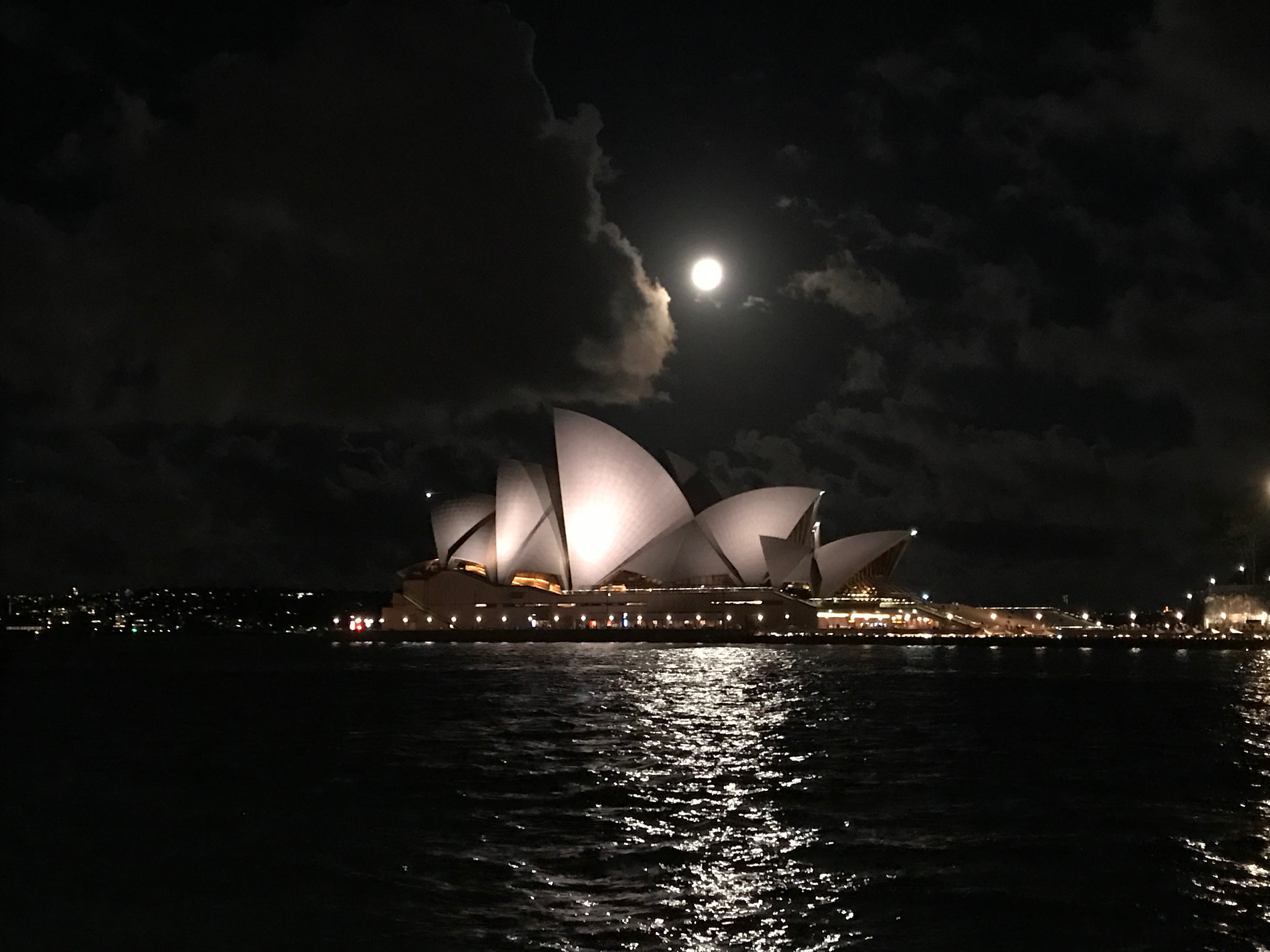
Sydney Opera House on a random evening in March (own photo)

The end of March brings to a close the first quarter of the year and serves as a reality check on what 2019 is starting to look like. There are two ways to assess ourselves and the past months – one way is to focus on addressing the weaknesses, an alternative is to focus on amplifying our strengths. Tom Rath’s StrengthFinder 2.0 claims the latter is better time well spent. My lessons this month re-enforced Tom’s claim!

A. One article I stumbled upon

I am not a big fan of rap music, however popular rapper 2 Chainz made it to my reading list. An article by Damon Brown mentions how the rapper focused on “getting one fan a day” as one example on being successful by focusing on those that like your work. These ‘fans’, other than the critics, can help us understand what we’re good at (our strengths) and what we should do more of. It makes reference to the 1000 true fans theory by Kevin Kelly and Seth Godin’s new book on how marketing has evolved from advertising to the mass, to earning trust with your smallest viable audience.

B. One place I visited last month

Doing more of what you’re good at with the right audience can take you places! The Wiggles Exhibition at the Power House Museum in Sydney is one strong example of this. 25 years ago the band decided that their strength is entertaining kids. They focused solely on this audience and became Australia’s most popular band. They realised that kids (and their parents) need much more than good music and they evolved the Wiggles brand into a great Transmedia experience – from their own Netflix Channel to sold out live shows, from music songs to games, from a 4 man band, to an Australian sensation till this very day.

C. One insightful meeting

My 3-year-old son started Preschool. As parents we were invited to an evening meeting at the school. We learned about the school’s approach to an all-rounded education – the social, emotional, physical, cognitive, creative and communication side of the children’s development. Apart from getting excited to see my son in a school context, the evening made me think on the right ingredients of a work culture which helps us be the best version of ourselves. It is not much different than the principles by which this one school does it, primarily by being aware of the different facets which make us human, and by creating the right environment for each facet to flourish. In this way people can be creative without a fear of failure, communicate effectively, feel safe enough to discuss conflicting ideas, be on top of their emotions and sensitive to others. If we agree that people should bring their whole self to work, then work should cater for all the human facets that make us whole. By work I primarily mean our actions and the way we go about getting things done everyday.

So this is how it all comes together – start with the strengths, match those with the smallest sizeable audience of fans/colleagues/customers, and create an environment where that exchange can flourish.

Lessons from February/19

Lavender Bay in February (own photo)

Keeping up with January, I’ve chosen 3 lessons from February which in one way or another really sit well together.

A. One book I keep going back to

For some time I have been snacking on a book called Multipliers by Liz Wiseman and Greg Mckeown. Have probably read almost the full book in non-sequential snacks of time. Each piece of it has a good reminder of how leadership styles can multiply or diminish individuals and teams, even when the intention of the leader is genuinely good. Reading this book at one go would probably mean you would be missing out on digesting it in a deeper way. It is a great read for leaders who really wish to succeed through managing a team which is bigger than the sum of its parts.

B. Random article I stumbled upon

One random article which I stumbled upon further re-enforced the notions presented in Multipliers. Rising above partisan politics, this article is written by Malta’s past Prime Minister, discussing the leadership style of his predecessor. The article opens by making reference to Henry Kissinger, who once said that the task of a leader is to get his people from where they are to where they have not been. Whether you agree with the author’s assessment of one of Malta’s most significant leaders is secondary. What resounded with me is the focus on principled leadership. So many times, leaders in political space and even the corporate world sway between naive positivism or harsh criticism. In between is the principled alternative, one which is rooted in the values that the leader genuinely embraces in his private life, within his family and professionally. And because it is genuine, its impact is much more significant than the other two extremes.

C. One movie worth watching

Finally one movie which I watched in February has been Race. The movie is a biographical sports drama on the life of Jesse Owens. The African-American athlete won 4 Gold medals in the 1936 Berlin Olympic Games, disrupting the intentions of the organisers to use the games to further fuel the idea that one race is superior to another. What impresses me the most in the story of Owens is that even after his wins, he still struggled in his own country.

I am not a Lady Gaga fan, and have not watched her latest movie. The artist made it to my newsfeed when she became the first woman in history to win an Oscar, Grammy, BAFTA and Golden Globe all in the same year. One story which the media reported featured a Facebook group which had been set up in her university days discouraging her from pursuing her musical passion. Whether or not you follow the artist, just the fact that I am almost sure you know who she is, makes everyone conclude she proved them wrong. As Jesse Owens did back in 1936.

So this is one lesson from February – Prove them wrong! “Them who?” you might ask. For a start, “them” are my moments of doubt and insecurity, those moments that diminish ideas about the present and hopes for the future.

Lessons from January/19

1/12th of 2019 is out already, so it is worth reflecting on the key things that will stay with me for the rest of it. Here is my top list.

A. Favourite quote – When my heart is a hamster wheel my inner life becomes a blur

This quote from the book The Unhurried Leader by Alan Fading really sums up how (office) life could be for most of us if we do not realise that there is a hamster wheel we could be victims of, and more importantly how more fulfilling it is to get off it by ruthlessly prioritising what’s more important. Sounds very prescriptive in saying it, but it impacts one’s self deeply.

B. New place I discovered – Frying Pan Lake, New Zealand

You do not get to discover such new places all year round. I was lucky enough to travel to New Zealand in January. We visited so many beautiful places, but this one stuck with me for the simple reason that it did not exist as it does now just a couple of hundred years ago. The Frying Pan Lake was formed as a result of a big volcanic eruption in 1886, and continued to become what it is today between that time and 1917. Walking along the volcanic valley you can still see hot springs and smell the ground burning underneath. If anyone needs a reminder that change is constant, Waimangu is the place.

C. Most meaningful moment – 3rd birthday party

I am much older than that, but my older son turns 3 in February. We did an early celebration this year to be able to share the big event with my in-laws who were visiting in January. It was a very informal afternoon out with some Maltese food, friends from 5 different countries and a dog. As the quote says, “happiness is real when shared”, and this was one such moment.

To more lessons in 2019.